Published
How much car insurance do you need: A comprehensive guide
Determining how much car insurance you need starts with understanding your state’s minimum coverage requirements. Each state sets its own rules, but in most states you will need some amount of liability insurance, which helps pay for inj...
Compare real rates, understand your coverage, and make confident decisions.

Written by
Ollie

Reviewed by
Scott Nyerges

Fact check by
Brent Buell
Determining how much car insurance you need starts with understanding your state’s minimum coverage requirements. Each state sets its own rules, but in most states you will need some amount of liability insurance, which helps pay for injuries or property damage you cause others in an accident.
However, state minimums may not provide enough protection for every driver. In this guide, we’ll explain how car insurance works and what to consider when choosing coverage that fits your needs.
What are the basic car insurance coverages you need?
The amount of coverage you need depends on your state, vehicle and financial situation. Most drivers should start by understanding liability coverage, which is required in most states, then consider whether additional protection, such as collision, comprehensive, uninsured/underinsured motorist coverage or personal injury protection makes sense for their needs.
Here are the essential car insurance coverages that every driver should consider:
Liability insurance
This helps protect you financially if you cause an accident that injures someone else or damages their property. Most states have minimum liability coverage requirements, so be sure to check your state’s rules.
Liability insurance typically includes two components:
- Bodily injury liability coverage helps pay for medical expenses, lost wages, and legal fees if someone else has been injured in an accident that you’ve caused.
- Property damage liability coverage helps pay to repair or replace another person's property if you damage it in an accident, such as a vehicle, garage door, or fence.
The required amount of liability coverage varies by state. Each state sets its own minimum coverage limits that drivers must meet, such as 25/50/25, which means $25,000 for bodily injury per person, $50,000 for bodily injury per accident, and $25,000 for property damage per incident. However, the state minimum is rarely sufficient to cover costs in the event of a major at-fault accident.
Collision insurance
This is designed to cover the cost of repairing or replacing your vehicle if it’s damaged in a collision with another vehicle or an object, such as a tree or guardrail. It applies regardless of who is at fault, but you’ll typically need to pay your deductible before coverage kicks in. When deciding whether to carry collision coverage, consider your vehicle’s value and how much you could afford to pay out of pocket after an accident.
Comprehensive insurance
Comprehensive coverage helps pay to repair or replace your vehicle if it’s damaged in a non-collision incident, such as theft, vandalism, fire, hail, flooding, or an animal encounter. Similar to collision coverage, you’ll need to determine appropriate deductibles and coverage limits based on your vehicle’s value and your budget.
Uninsured/underinsured motorist (UM/UIM) insurance
Uninsured/underinsured motorist coverage steps in when you’re involved in an accident with a driver who lacks insurance or has inadequate coverage. Depending on your state and policy, it may cover medical expenses and property damage that the at-fault driver’s insurance cannot fully pay for.
Personal injury protection (PIP)
Personal injury protection insurance, sometimes known as “no-fault” insurance, is required in some states and optional in others. It covers medical expenses, lost wages, and other related costs for you and your passengers, regardless of who caused the accident.
What are the state minimum requirements for car insurance?
Each state sets its own minimum car insurance requirements for drivers. These rules establish the baseline amount of coverage you need to legally drive and show financial responsibility if you cause an accident. However, these amounts may be too low to provide adequate financial protection in the event of a serious accident.
Here are the state minimum requirements for car insurance by state, including coverage limits for bodily injury and property damage.
| State | Minimum car insurance limits |
| Alabama | Liability: 25/50/25 |
| Alaska | Liability: 50/100/25 |
| Arizona | Liability: 25/50/15 |
| Arkansas | Liability: 25/50/25 |
| California | Liability: 30/60/15 |
| Colorado | Liability: 25/50/15 |
| Connecticut | Liability: 25/50/25, UM/UIM BI: 25/50 |
| Delaware | Liability: 25/50/10, PIP: 15/30 |
| District of Columbia | Liability: 25/50/10, UM BI: 25/50, UMPD: $5,000 |
| Florida | Liability: 10/20/10, PIP: $10,000. BI liability not required by Florida but many carriers require 10/20 |
| Georgia | Liability: 25/50/25 |
| Hawaii | Liability: 20/40/10, PIP or PPO: $10,000 |
| Idaho | Liability: 25/50/15 |
| Illinois | Liability: 25/50/20, UM BI: 25/50 |
| Indiana | Liability: 25/50/25 |
| Iowa | Liability: 20/40/15 |
| Kansas | Liability: 25/50/25, UM/UIM BI: 25/50, PIP: $4,500/person for medical expenses $900/month for one year for disability/loss of income $25/day for in-home services $2,000 for funeral, burial or cremation expense $4,500 for rehabilitation expense |
| Kentucky | Liability: 25/50/25, PIP: $10,000 |
| Louisiana | Liability: 15/30/25 |
| Maine | Liability: 50/100/25, UM/UIM BI: 50/100, Medical payments: $2,000 |
| Maryland | Liability: 30/60/15, UM/UIM BI: 30/60, UMPD: $15,000, PIP $2,500 |
| Massachusetts | Liability: 20/40/5, UM/UIM BI: 20/40, PIP: $8,000 |
| Michigan | Liability: 50/100/10, PIP: 6 choices from $50,000 to unlimited medical, PPI: $1,000,000 |
| Minnesota | Liability: 30/60/10, UM/UIM BI: 25/50, PIP: $40,000 |
| Mississippi | Liability: 25/50/25 |
| Missouri | Liability: 25/50/10, UM BI: 25/50 |
| Montana | Liability: 25/50/20 |
| Nebraska | Liability: 25/50/25, UM/UIM BI: 25/50 |
| Nevada | Liability: 25/50/20 |
| New Hampshire* | Liability: 25/50/25, UM/UIM BI: 25/50, Medical payments: $1,000. *Insurance not mandatory in New Hampshire |
| New Jersey | Liability: 30/70/25 (standard policy), UM/UIM BI: 15/30, UMPD: $5,000, PIP: $15,000 |
| New Mexico | Liability: 25/50/10 |
| New York | Liability: 25/50/10, UM BI: 25/50, PIP: $50,000 |
| North Carolina | Liability: 50/100/50, UM BI: 30/60, UMPD: $25,000 |
| North Dakota | Liability: 25/50/25, UM/UIM BI: 25/50, PIP: $30,000 |
| Ohio | Liability: 25/50/25 |
| Oklahoma | Liability: 25/50/25 |
| Oregon | Liability: 25/50/20, UM BI: 25/50, PIP: $15,000 |
| Pennsylvania | Liability: 15/30/5, First-party benefits (PIP): $5,000 |
| Rhode Island | Liability: 25/50/25 |
| South Carolina | Liability: 25/50/25, UM BI: 25/50, UMPD: $25,000 |
| South Dakota | Liability: 25/50/25, UM/UIM BI: 25/50 |
| Tennessee | Liability: 25/50/15 |
| Texas | Liability: 30/60/25 |
| Utah | Liability: 25/65/15, PIP: $3,000 |
| Vermont | Liability: 25/50/10, UM/UIM BI: 50/100, UMPD: $10,000 |
| Virginia | Liability: 50/100/25, UM/UIM BI: 25/50, UMPD: $20,000 |
| Washington | Liability: 25/50/10 |
| West Virginia | Liability: 25/50/25, UM BI: 25/50, UMPD: $25,000 |
| Wisconsin | Liability: 25/50/10, UM BI: 25/50 |
| Wyoming | Liability: 25/50/20 |
Sources: Property Casualty Insurers Association of America and Insurance Information Institute; state departments of insurance and motor vehicles.

Ask Ollie
Understand this faster - and find what matters for you
What are additional coverage options to consider?
Even if you have “full” coverage, which includes liability, comprehensive, and collision insurance, there are other types of car insurance that you may wish to consider. These options offer extra layers of protection to you and your car, including:
Medical payments (MedPay) insurance
This helps pay for accident-related medical expenses for you and your passengers, regardless of who was at fault. It may cover costs such as ambulance rides, hospital bills, and doctor visits, depending on your policy. MedPay can be useful even if you have health insurance because it may help cover deductibles, copays or other out-of-pocket medical costs after an accident. Coverage limits are usually lower than PIP limits, however, and more limited in scope.
Rental car reimbursement
This covers the cost of renting a vehicle while yours is being repaired due to a covered incident. This coverage is convenient and can save you money on rental fees.
Towing and roadside assistance
Towing and roadside assistance coverage provides assistance if your vehicle breaks down, needs a jump start, or if you lock yourself out. It offers peace of mind and ensures you’re never stranded on the road.
Gap insurance
If you finance or lease your vehicle, gap insurance can help protect you if your car is totaled or stolen. It helps pay the difference between your car’s actual cash value and the amount you still owe on your loan or lease. This coverage can be especially useful if you made a small down payment, have a long loan term, or owe more than the vehicle is worth. Many lenders and leasing companies require this coverage.
Non-owners insurance
This coverage is designed for individuals who don’t own a car but regularly rent or borrow vehicles. It provides liability coverage when driving a rented or borrowed car, protecting you financially in the event of an accident or damage you cause while driving.
Non-owner insurance usually includes bodily injury and property damage liability, but it generally does not cover damage to the vehicle you’re driving, your own injuries or personal belongings.
Car Insurance Cost Calculator
Find out how much you'll pay for auto insurance coverage.

Rate estimates in this calculator are based on CarInsurance.com's analysis of full coverage insurance for a single driver with good credit, homeowner status and a clean driving record, operating a financed Honda Accord LX. Full coverage includes 100/300/100 BI/PD liability limits and $500 comprehensive and collision deductibles.
Still have questions
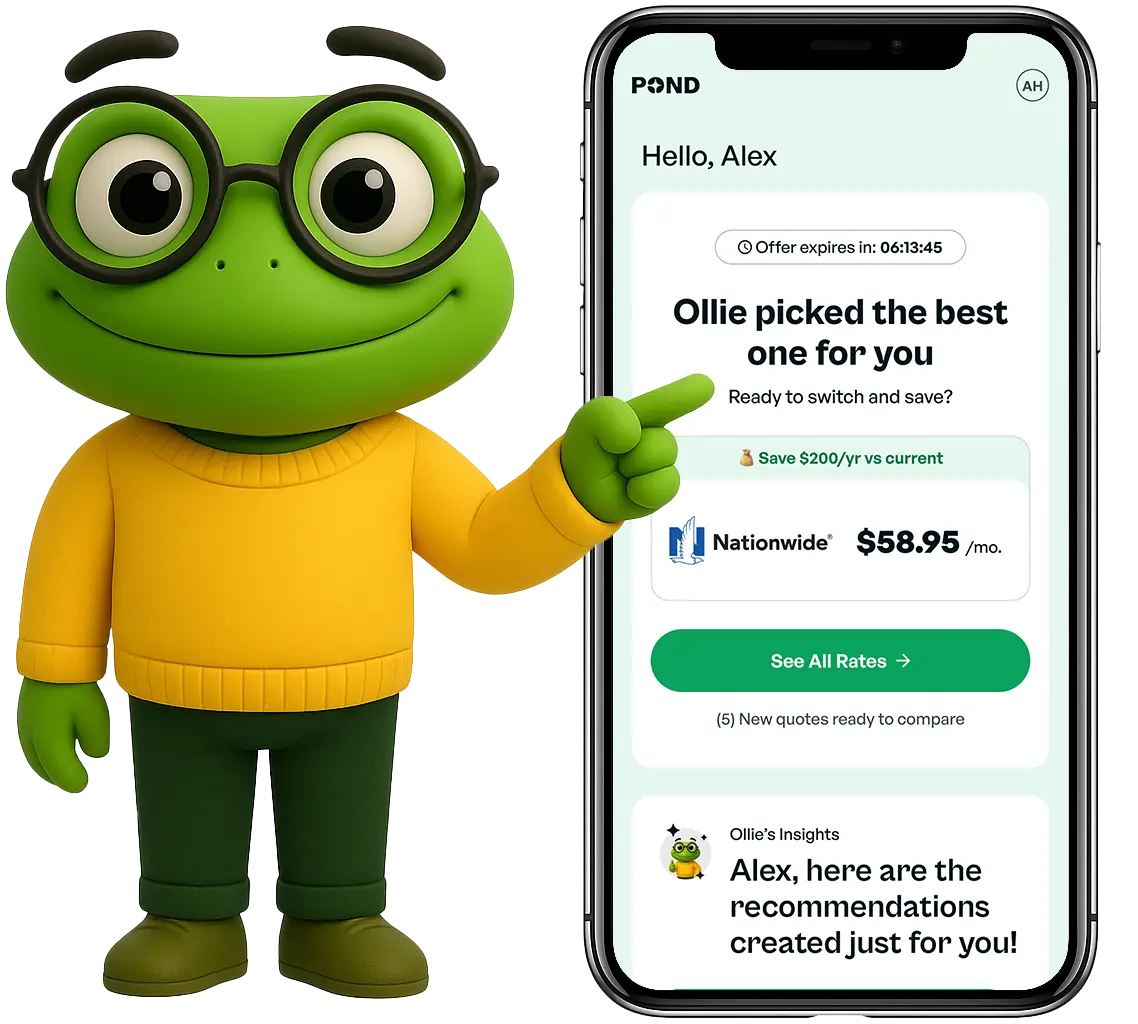
Still have questions? Ollie can explain what this means for your situation - no ZIP, no commitment, just a straight answer.
Related articles

Get Auto Insurance Quotes in Minutes
Enter your ZIP code and answer a few quick questions to compare auto insurance options from providers in your area.