Published
How Much Renters Insurance Do I Need?
You need enough renters insurance to cover the cost of replacing your belongings, protect your assets if you’re held responsible for injuries or damage to others, and pay for temporary housing if your rental home becomes unlivable after...
Compare real rates, understand your coverage, and make confident decisions.

Written by
Ollie

Reviewed by
Scott Nyerges

Fact check by
Brent Buell
You need enough renters insurance to cover the cost of replacing your belongings, protect your assets if you’re held responsible for injuries or damage to others, and pay for temporary housing if your rental home becomes unlivable after a covered event. The right coverage amount depends on the value of your belongings, your living situation, and the level of financial protection you want.
A good starting point is to create a home inventory and estimate the cost to replace everything you own today. Many renters start with $20,000 to $30,000 in personal property coverage, but that figure can increase if you own expensive furniture, electronics, jewelry, musical instruments, or hobby equipment.
For liability coverage, many policies start at $100,000, though $300,000 or more may make sense if you have significant assets to protect, own pets, or host guests frequently. You should also consider how much of a deductible you can afford in the event of a covered loss.
Finally, you’ll want to determine how much additional living expenses (ALE) coverage you need if you can’t live in your home temporarily due to a covered event, such as a fire or tornado. Some policies set ALE coverage as a percentage of your personal property limit; others use a separate dollar or time limit.
Choosing renters insurance is not about buying the largest policy available. It is about finding coverage that matches your lifestyle, budget, and risks so you can recover financially from unexpected events such as theft, fire, vandalism, or certain weather-related losses.
**Key takeaways**
- The right renters insurance amount depends on what you own and your living situation.
- Most renters insurance includes personal property, liability, and additional living expenses coverage.
- Making a list of your belongings can help you choose the right coverage amount.
- Your landlord's insurance usually does not cover your personal belongings.
**Why does the right amount of renters insurance coverage matter?**
The right amount of renters insurance, also known as an HO-4 policy, gives you enough protection to recover after a covered loss without paying for coverage you don’t need. If your limits are too low, you could be left paying out of pocket to replace your belongings, handle liability costs, or cover temporary housing if a covered event makes your rental home unlivable.
Many renters do not realize how quickly everyday items like furniture, clothes, electronics, and household goods can add up. If you are underinsured, replacing your belongings after theft, fire, or other covered loss could cost more than your policy would pay.
At the same time, buying more coverage than you need can mean paying for protection that doesn't match your situation. The right amount should fit your belongings, your lifestyle, and your comfort level.
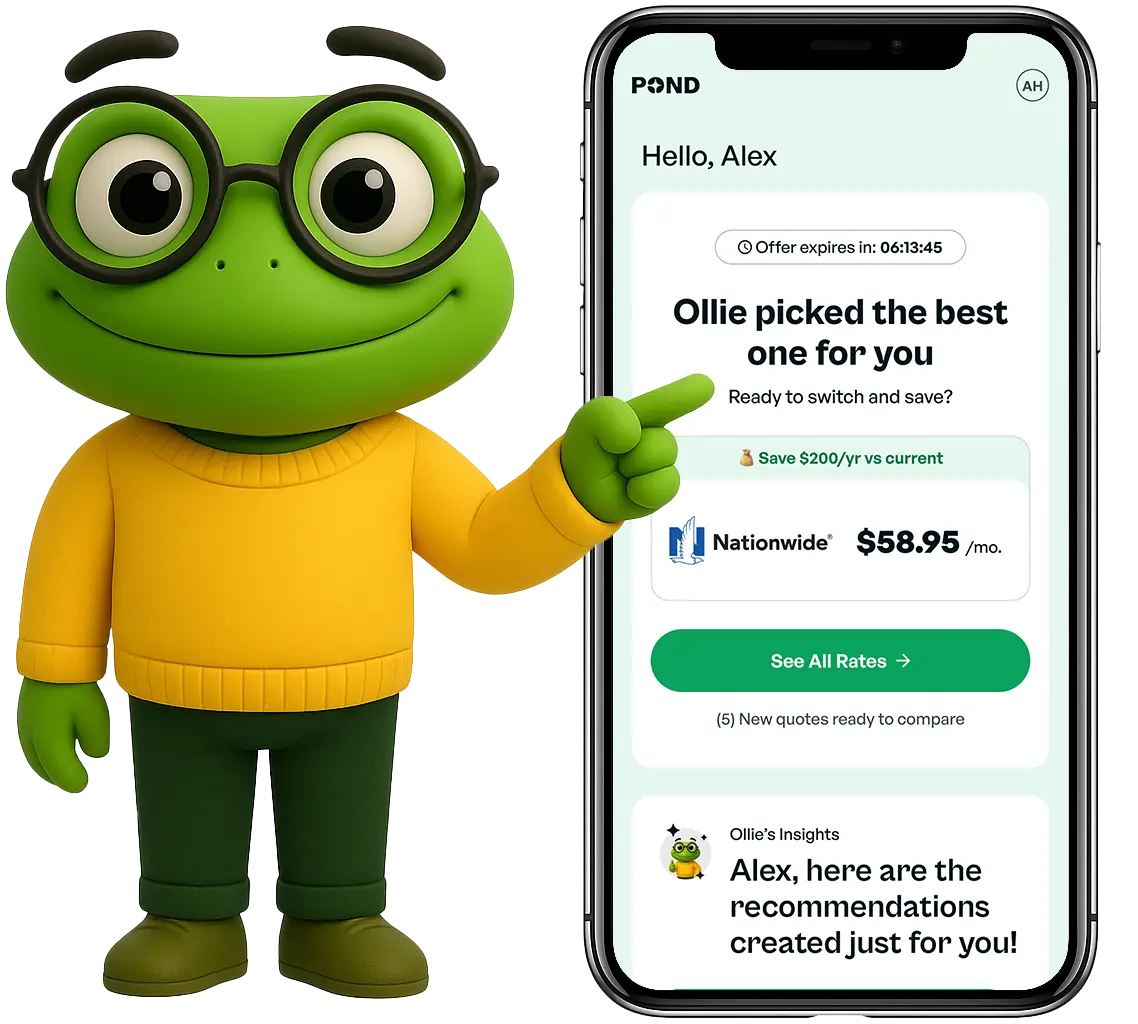
If you're unsure where to start, Ollie can help simplify coverage decisions and make them easier to understand.

Ask Ollie
Understand this faster - and find what matters for you
**What are the three types of renters insurance coverage?**
Most renters insurance policies include three types of coverage: personal property, liability, and additional living expenses (ALE). Together, these cover your belongings, help protect you if you're responsible for damage or injuries, and assist with temporary housing costs if a covered event makes your rental unlivable.
Understanding what each type of coverage does can help you choose the right amount of renters insurance for your needs.
| Coverage type | What it protects | How to determine the right amount |
| Personal property coverage | Your belongings, including furniture, clothing, electronics, and household items | Based on the replacement value of what you own |
| Liability coverage | You, if you accidentally damage someone else’s property or someone is injured | Based on your lifestyle, assets, and comfort level |
| Additional living expenses (ALE) | Extra costs when your rental becomes temporarily unlivable | Based on local housing and living costs |
**How to calculate how much renters insurance you need**
To determine how much renters insurance you need, add up the cost of replacing your belongings, choose an appropriate liability limit, and consider temporary living expenses if your rental becomes unlivable after a covered loss.
The following steps can help you understand what coverage makes sense for your situation:
Step 1: Take a home inventory
Make a list of all your belongings, including furniture, clothes, electronics, kitchen items, and other household items. Go room by room and include anything you would need if you had to start over.
Step 2: Estimate the replacement cost
Once you’ve compiled your inventory, think about how much it would cost to replace your belongings at today’s prices. This can help you determine how much personal property coverage you need. Many renters start with $20,000 to $30,000 in coverage, but you may need more if you own expensive electronics, furniture, jewelry, instruments or hobby equipment.
Step 3: Think about liability risk
Consider your lifestyle, savings, and risk tolerance. Liability coverage can help protect you if you accidentally damage someone else’s property, or if someone gets hurt and you’re held responsible. Many policies start at $100,000 in liability coverage, but higher limits may make sense if you have pets, frequent guests or assets to protect.
Step 4: Consider your living situation
Your coverage needs may look different depending on whether you live alone, share a home with roommates, or rent a larger apartment. Consider local hotel, food, and transit costs in case you need temporary housing after a covered loss.
**What factors affect how much renters insurance you need?**
The amount of renters insurance you need depends on factors such as where you live, the value of your belongings, whether you have roommates, your financial situation, and any requirements in your lease. These factors can affect how much personal property, liability and additional living expenses coverage makes sense for you.
Your coverage can depend on the following factors:
Where you live
Your location matters. Weather, building type, crime rates, and local housing costs can all affect how much coverage you need. For instance, you may need higher additional living expenses coverage if you live in an area with a high cost of living like New York City.
High value belongings
Expensive electronics, jewelry, instruments, and similar items can change how much personal property coverage you need. Some valuables may also have special limits, so you may need an endorsement or scheduled coverage to insure them fully.
Roommates
Having roommates can affect your coverage needs. In many cases, your policy covers your belongings, not theirs, unless they are listed on your policy. Roommates typically need their own renters insurance policy.
Your financial cushion
Think about how easily you could handle unexpected costs after a covered loss. If replacing your belongings, paying a deductible, or handling a liability claim would strain your finances, you may want higher limits.
Landlord requirements
Some landlords require renters insurance or specific liability limits. Checking your lease can help you understand the minimum coverage you need, but you may still want higher limits based on your belongings and risk.
**Actual cash value vs. replacement cost renters insurance**
The main difference between replacement cost and actual cash value coverage is how your claim is paid. Replacement cost coverage helps pay to replace damaged or stolen belongings with similar new items, while actual cash value (ACV) coverage pays what those items are worth today after accounting for depreciation due to age and wear.
Understanding this difference can help you choose the type of coverage that best fits your needs and budget.
Think about an older laptop:
- Actual cash value asks: "What is this laptop worth now?"
- Replacement cost asks: "What would it cost to replace this laptop with a comparable model today?"
| Feature | Actual cash value (ACV) | Replacement cost coverage |
| Payout basis | Current depreciated value | Cost of a comparable new item |
| Premium cost | Typically, lower | Typically, higher |
| Best for | Budget-conscious renters | Renters wanting full replacement protection |
| Claim example (3-year-old $1,000 laptop) | May pay approximately $400 to $600 | May pay approximately $1,000 |
Common renters insurance coverage mistakes to avoid
Common renters insurance mistakes include underestimating the value of your belongings, choosing too little liability coverage, forgetting to update your policy after major purchases, and assuming your landlord's insurance protects your personal property. These mistakes can leave you with coverage gaps when you need protection most.
Avoiding the following mistakes can help ensure your policy matches your needs:
Underestimating what you own
Many renters forget how quickly everyday items add up. Clothes, furniture, electronics, and kitchen items can be worth far more than you think once you tally everything room by room.
Skipping adequate liability coverage
Liability coverage helps protect you if you accidentally damage someone’s property or if someone is injured and you’re held responsible. Focusing only on belongings can leave significant gaps in your financial protection.
Forgetting to update coverage
Bought new furniture, upgraded your electronics, or purchased expensive jewelry? Your coverage should change when your life changes. An outdated policy may not fully cover your current belongings, especially if some items are subject to special limits.
Assuming your landlord covers your belongings
Your landlord's insurance usually protects the building structure, not your personal property inside it or your temporary living expenses after a covered loss. This is one of the most common and costly misconceptions among renters.
**Ready to find your right coverage amount?**
Finding the right coverage does not have to feel overwhelming.
Ollie can help you review your coverage, identify potential gaps, and better understand what makes sense for your situation.
CTA Button: Let Ollie Check My Coverage
**Is there a standard amount of renters insurance I should get?**
No. The right amount depends on what you own, your living situation, and the protection you want.
**Can I change my renters insurance coverage amount later?**
Yes. Renters insurance coverage can be updated if your belongings, living situation, or coverage needs change.
**Does renters insurance cover my roommate's belongings?**
Typically, no. Renters insurance covers your belongings, not your roommate's, unless they are listed on your policy. Roommates usually need their own coverage.
**What if I own expensive items like jewelry or electronics?**
Expensive belongings should be included when estimating how much coverage you need. But some items, such as jewelry, instruments, collectibles or high-end electronics, may have special limits or require an endorsement.
**How do I know if I have enough liability coverage?**
You may have enough liability coverage when your limit reflects your assets, lifestyle and risk. Many renters policies start at $100,000, but higher limits may make sense if you have savings, pets, frequent guests or other assets to protect.
Still have questions
Still have questions? Ollie can explain what this means for your situation - no ZIP, no commitment, just a straight answer.
Related articles

Get Renters Insurance Quotes in Minutes
Enter your ZIP code and answer a few quick questions to compare renters insurance options from providers in your area.